
Members with unmanaged behavioral health conditions cost more everywhere — more ER visits, more hospital stays, physical health conditions left untreated because the mental health issue was never addressed. And engagement is lowest in exactly the communities the existing tools were never designed for: among adults with fair or poor mental health, 36% of Hispanic and 39% of Black adults received care in the past three years, against 50% of white adults — and 55% of Asian adults who went looking couldn't find a provider who understood their background. Not because the benefit isn't available. Because the tools weren't built for them.
The ongoing, structured support that reaches members between clinical contacts — before they escalate.
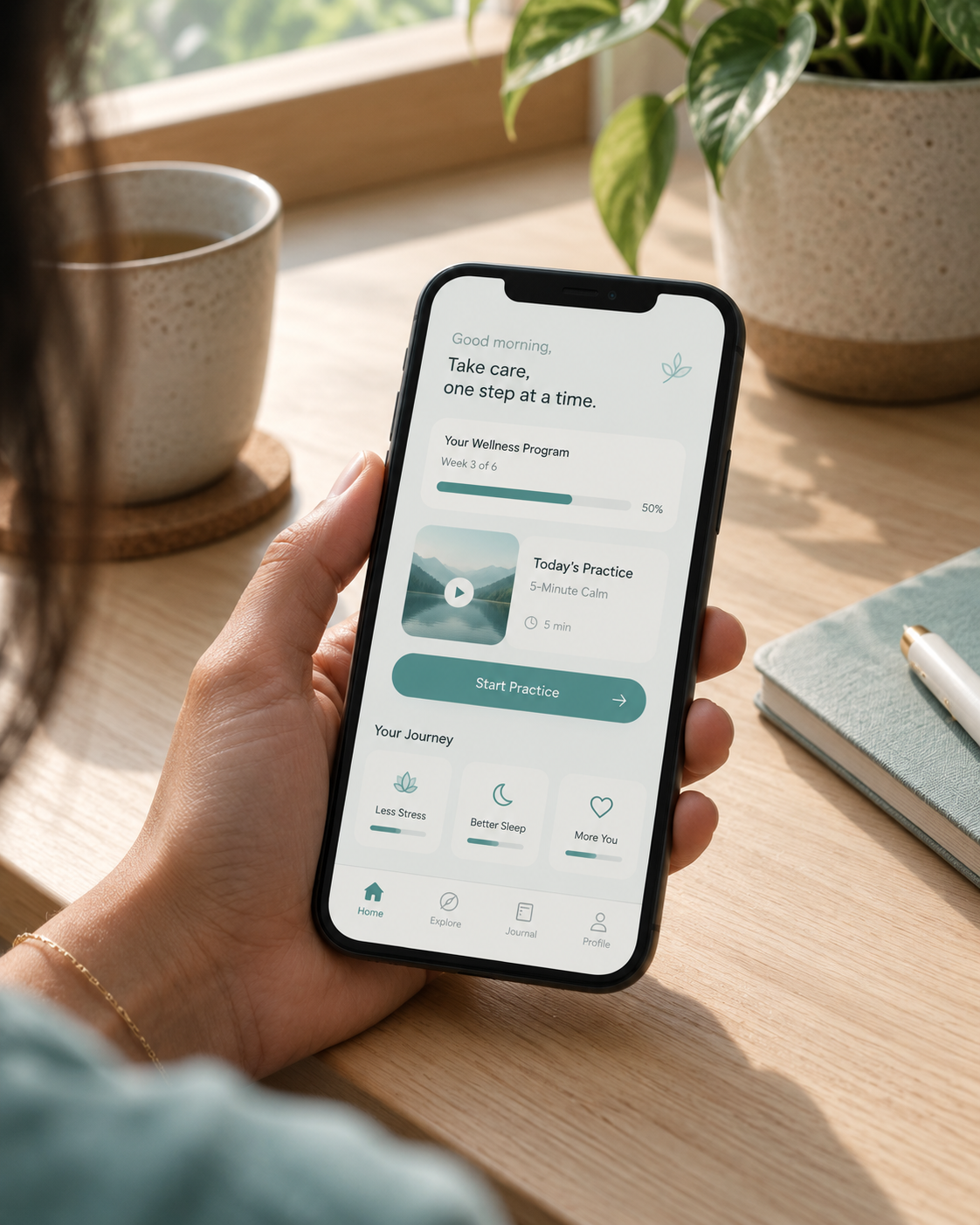
Short for Ananda — Sanskrit for joy — Ana learns across every member experience: every program, every interaction, every check-in. She uses that to personalize what each member gets next, and responds the moment someone needs support, connecting them to crisis resources when it matters. Clinical. Personalized. Private. Always on.
Existing tools assume people will seek a stranger's help by walking into an office or calling a hotline — for some communities, that step alone is the barrier. Sukhi removes it: no referral, no waitlist, no appointment with someone who might know your family. Private, self-directed, and available from a phone whenever someone's ready.
Where familismo — the norm that mental health stays within the family — makes outside help feel like a betrayal, private support doesn't ask anyone to break that circle.
Where seeking help outside the family carries real stigma, no one else has to know support was ever used.
Where family-first expectations and intergenerational pressure make outside help feel disloyal, a private conversation doesn't put that loyalty at risk.
Where collectivist norms discourage individual disclosure, support that never leaves the phone never has to be disclosed.
White-labeled inside your member portal. Your team does nothing technical.
No referral. No waitlist. Ana is live within minutes of signup.
Aggregate utilization, program completions, wellbeing trends. No individual data. Ever.
Catch members before they escalate. That's where the ROI is.
Most behavioral health vendors connect members to a provider directory or a helpline — the same referral step that's already the barrier for the members with lowest engagement. Sukhi is self-directed and private: no referral, no waitlist, live the moment a member opens it. It complements your existing clinical network rather than replacing it — Ana connects members to a licensed provider when that's what's needed.
$1–2 per member per month, scaled to your population size — see the cost comparison above. Book a call and we'll walk through the exact numbers for your specific plan.
White-labeled inside your existing member portal — no separate app for members to download. We handle configuration, hosting, and updates on our side. Typical time from signed contract to live: a few weeks, not a multi-quarter rollout.
Ana screens for distress signals during every conversation. When risk is detected, she pauses therapeutic content, acknowledges the situation, and connects the member directly to crisis resources and emergency services. Crisis protocol documentation is available on request.
Member data is architecturally private. Insurers see aggregate data only. Not a policy — a technical guarantee.
Just 20 minutes — learn about Ana, our program library, and how we deploy for your members.
Encrypted in transit. All traffic between members, Ana, and our servers runs over HTTPS/TLS.
No PHI required to engage. Members don't need to share protected health information for Ana to work — that's architectural, not just a policy.
Access-controlled internally. Conversation review is limited to authenticated staff tooling, not open by default.
Ask us directly, we'll give you a straight answer: at-rest database encryption scope, SOC 2 / compliance certification status, Business Associate Agreement (BAA) availability, data retention policy, and incident response process. We'd rather answer these on a call than put up a badge we can't back up.